-01.png)
5 Tips on How to Start and Grow a Food Business in the Philippines


Starting a food business sounds exciting.
And it can be.
But many food businesses fail not because the food is bad — but because the systems, positioning, and business model are weak.
If you are planning to open a restaurant, cafe, catering company, cloud kitchen, food brand, or home-based food business, here are five important things you should understand first.
1. Start With the Right Product — Not Just Passion
Many people open food businesses based only on emotion.
“I love cooking.”“My friends like my food.”“I want a cafe.”
But successful food businesses usually solve a clear market demand.
Before starting, ask:
Who is this for?
Why will they buy repeatedly?
Is the market large enough?
Is the product profitable?
Can it scale?
Is it operationally realistic?
Good food matters.
But product-market fit matters even more.
2. Most Restaurants Do Not Fail Because of Food
Many food businesses fail because of:
weak systems
poor costing
bad cash flow management
inconsistent operations
poor leadership
wrong pricing
weak marketing
uncontrolled overhead
The modern food entrepreneur must understand both:
culinary execution
AND
business management
This is one of the biggest gaps in traditional culinary and HRM education.
3. Small Margins Require Strong Systems
Food businesses can become chaotic very quickly.
Without systems, even high sales can still lose money.
Strong operators understand:
inventory
labor control
menu engineering
purchasing
workflow
consistency
customer retention
operational efficiency
The food industry rewards discipline far more than hype.
4. The Biggest Opportunity Is No Longer Just Restaurants
This is one of the biggest changes happening in the industry today.
Many entrepreneurs still think:“Food business = restaurant.”
But modern food businesses now include:
cloud kitchens
catering
packaged products
bottled sauces
frozen products
private dining
content creation
education
subscription models
franchising
licensing
asset-light food brands
Some of the fastest-growing food businesses today are scalable systems — not simply dining rooms.
5. Learn Business Early, Not After Failure
Many chefs and food entrepreneurs only study business after losing money.
That is the hard route.
The smarter path is learning early:
pricing
positioning
profitability
branding
operations
marketing
leadership
communication
leverage
Because eventually, every food business becomes a business problem — not just a cooking problem.
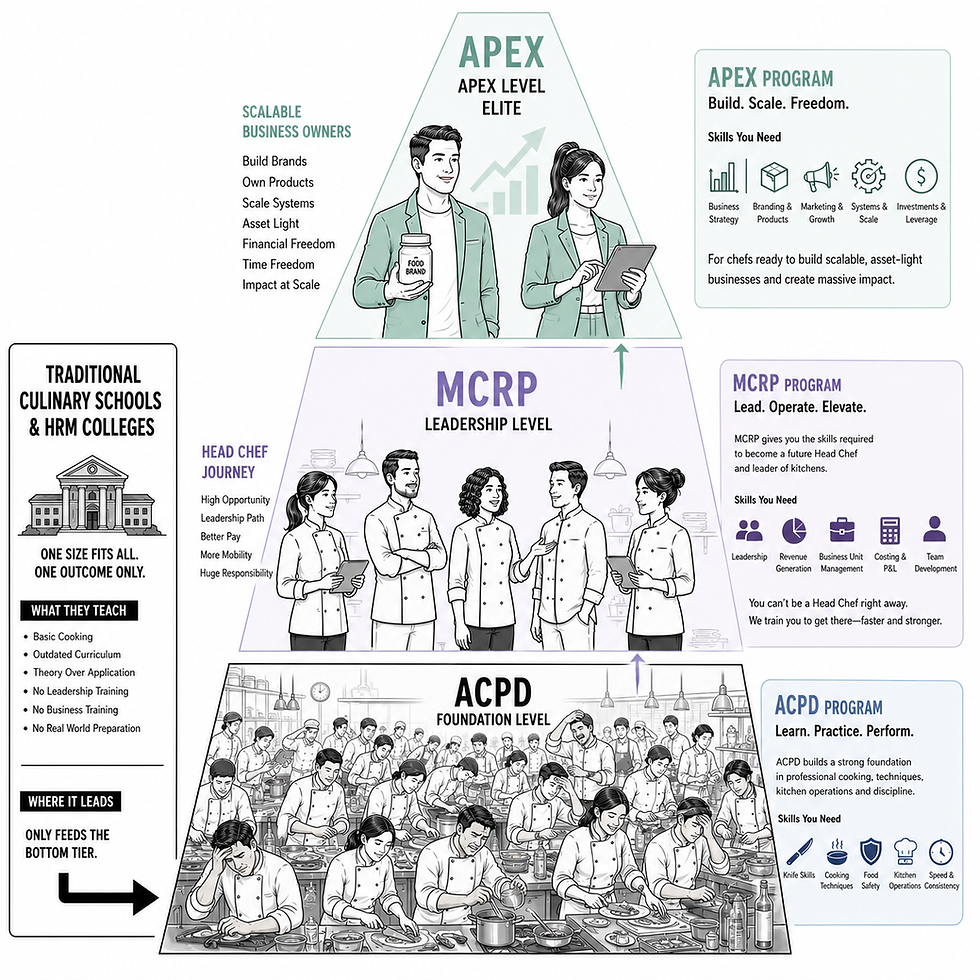
At Aleanza, this is one of the reasons programs like MCRP and APEX were developed:not only to teach culinary execution, but also leadership, operations, and long-term business thinking for the modern food industry.
Because building a successful food business today requires much more than cooking alone.


Comments